Food Tricks: Food Photography & Culinary Styling
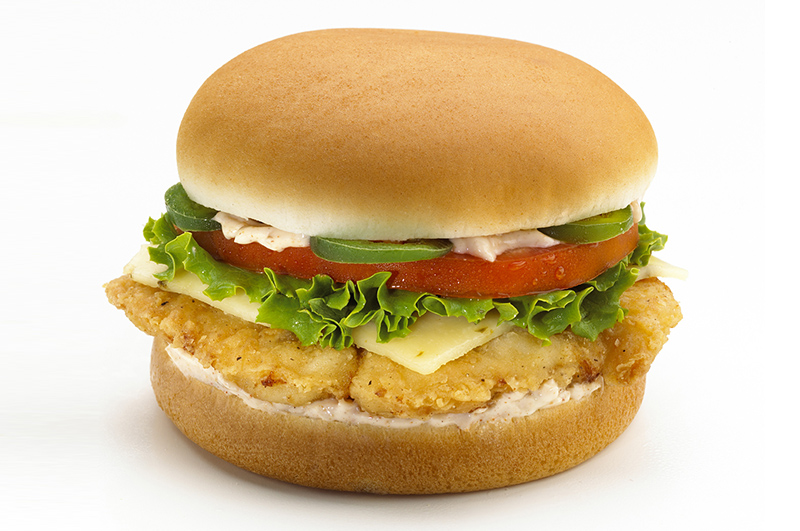
Ever notice how, whenever you go to a fast food restaurant to get a burger and some fries, the food on the menu photographs looks so different from the food that arrives on your tray? On the men, the burgers look plump and delicious, the lettuce looks crisp and fluffy, and the fries seem to jump out of the box.
That’s not to say the food you’ve ordered isn’t any good — if fast food didn’t taste so good, we wouldn’t eat it — but that it doesn’t look nearly as appetizing as it does in commercials or advertisements. The reasons are twofold: Crafty food photography techniques and culinary styling.
The burgers are big. And they’re not necessarily cooked. Burgers lose mass when they’re cooked, so a burger that’s four ounces before being cooked — like a McDonald’s Quarter Pounder — might only be around three ounces once it comes off the grill. But for an advertisement, a culinary stylist will only cook the burger for a few seconds on each side — just enough so that it doesn’t look raw. Then he or she will use a hot iron to sear those beautiful griddle marks onto it.
But they are painted. Because they’re not fully cooked, burgers don’t achieve the deep brown color a well-done burger is supposed to have. Before a food photographer takes a snapshot of the burger, a culinary stylist will paint it with food dyes to make it look well-done.
The pieces are perfect. Usually, when the line cook at the fast food restaurant assembles your burger, he or she grabs the first bun in the bag, or the topmost handful of lettuce from the pile. But a culinary stylist will go through dozens of buns, tomato slices, lettuce leaves and onions to find the most photogenic pieces of food.
You don’t eat cardboard or pins. But it’s in the burger anyway. A burger — even when it’s undercooked — tends to soak the bun in juices. It’s a problem that’s only exacerbated by the hot lights of a photo studio. But a circular piece of cardboard, placed just between the burger and the bottom half of the bun, will prevent the bun from getting soggy. The pins are used to keep the burger’s dressings in place.
Fries? Or flowers? An order of fries in an advertisement is carefully arranged, like a bouquet of flowers. The culinary stylist will pick only the best fries to appear in the photograph, and use pins or toothpicks to stick them into a hunk of styrofoam that fits perfectly into its cardboard holder.
Culinary styling and food photography are trades that go hand in hand, like CPA and tax attorney. The tricks of the trade are many and varied. So: The next time you’re in a fast food restaurant wondering what to get, remember that the pictures may not be so accurate.
BACK TO ALL POSTS